Stamped concrete can transform a bland slab into something that looks expensive and bespoke without the cost and maintenance of natural stone or brick. In Tampa, where sun, rain, and salty air test every surface, choosing the right stamped finish, color system, and sealing regimen matters as much as the pattern you pick. All Phase concrete has installed hundreds of decorative surfaces across the city and suburbs, so the examples and trade-offs here are drawn from real projects: pool decks that lasted a decade with minimal repair, driveways that failed because they were under-specified, porches that retained color despite heavy foot traffic. If you are deciding on stamped concrete for your home or business, these are the practical options and judgments you will want to weigh.
Why stamped concrete is a smart choice in Tampa FL Stamped concrete delivers aesthetic flexibility and durability. It can mimic slate, cobblestone, wood plank, or tile patterns at a fraction of the material cost. For Tampa properties, two additional benefits stand out. First, a low-maintenance finish resists the mold and organic staining that humid climates produce. Second, when correctly mixed and placed, stamped concrete handles vehicle loads and the occasional heavy storm better than pavers that shift and sink.
That said, "correctly" involves several decisions: mix design that accounts for local soils and groundwater, reinforcement for driveways and larger patios, control joint layout, color fading allowances, and a sealing schedule that combats UV and chlorine when the slab is near a pool. All Phase concrete emphasizes these points on every estimate and backs them with on-site examples. Mentioning concrete services in Tampa FL is not just search-friendly phrasing, it reflects a service area where techniques must fit climate and use.
Patterns: what looks work best here Not every pattern is equally well suited to every context. For a pool deck you need a texture that is slip resistant, yet pleasant bare-foot. For a driveway you want a pattern that masks tire marks and minimizes weeds at joints. For a front porch you are balancing curb appeal with a seamless transition to your entry.
- Slate and random stone look authentic and hide small cracks well, but they require deeper stamping mats and a textured release agent that can wind up in low spots if not cleaned correctly. They are a strong choice for pool surrounds because the irregular pattern breaks up heat spots and provides traction. Cobblestone or small rectangular pavers read as classic and upscale, and they pair with edging bands of contrasting color. On driveways, though, very small cobbles can feel noisy under tires and require more precise control-joint planning to avoid an unwanted checkerboard of faded patches. Wood plank stamps are popular for patios where homeowners like the warm look of decking without the rot concerns. Keep in mind that plank patterns demand crisp formwork and joint grooves that mimic real board seams; otherwise the effect looks superficial. Tuscan tile and large-format tile stamps offer a clean, Mediterranean aesthetic that suits lanai areas. They tend to show surface imperfections more than textured stone, so subgrade preparation and a smooth screed are essential.
Color systems: integral, shakes, and stains, and when to use each Color makes or breaks the stamped look. There are three main approaches: integral color (mixed into the concrete), color hardeners or "shakes" applied at the surface during finishing, and acrylic or acid stains applied after curing. Each has strengths and trade-offs.
Integral color yields the most durable overall color because pigment is distributed through the slab. It is especially sensible on driveways and commercial pads where abrasion from tires or foot traffic is high. Expect color variation across pours; designers often embrace that as a natural stone effect. Integral color costs more up-front because of pigment dosage, but it reduces future maintenance.
Color hardener or shake-on powders are broadcast and troweled into the surface while the slab is still plastic. This method produces rich, variegated tones that photograph well and are standard in decorative stamped work. It also increases surface density and resistance to scaling. The trick: timing. Too early and the powder sinks and fades, too late and it won't bond. Experienced crews like those at All Phase concrete time the broadcast based on ambient temperature and slump, which in Tampa can change midday when sea breezes and humidity shift.
Acrylic and acid stains provide the most control for post-pour effects. Stains penetrate and react with the calcium in the cement, which creates unique, mottled finishes. The downside is that stains sit on the surface chemistry and therefore are more vulnerable to abrasion without a strong sealer. For pool areas where chlorine will attack some sealers and stains, a high-solid acrylic followed by a specialty topcoat designed for pool decks keeps color stable longer.
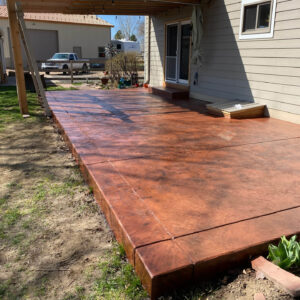
Texture and slip resistance: safety versus finish Slip resistance is not an afterthought in Tampa. When wet, smooth decorative concrete can be hazardous. Adding texture to the stamp, selecting coarse-release agents, or embedding light silica sand into the sealer are ways to increase traction. Each method affects appearance. A heavily textured stamp looks and feels rustic, while silica in a sealer slightly dulls gloss and can collect dirt in high-traffic zones.
From experience, a balanced approach works best for homes with children and elderly residents. Use a textured stamp that provides macro traction, then add a very light grit to the topcoat only in high-walk areas. That way the pattern remains visible and easy to maintain, while dangerous slip risk is reduced.
Durability and reinforcement choices Concrete fails when either the subbase moves or the slab lacks appropriate reinforcement for its load. For residential stamped patios and pool decks, 3,000 to 4,000 psi concrete with 4 to 6 inches thickness is typical, often with welded wire mesh or rebar for larger spans. Driveways benefit from 5,000 psi mixes and thicknesses of 5 to 6 inches, especially if heavy trucks will park or if the soil is compressible.
On sandy soils common near Tampa Bay, a proper subgrade compaction and an 8-inch crushed rock base significantly reduce risk of settlement. Where frost is not a concern, drainage is the key threat. All Phase concrete routinely installs perimeter drains or grades the slab to direct water away from foundations and pool equipment. Reinforcement choices also weigh cost against longevity: fiber reinforcement can improve crack control and reduce steel labor costs, but it is not a substitute for bars where predictable shrinkage cracks must be held tightly.
Sealing and maintenance: a realistic schedule Sealers protect both color and surface integrity. For stamped concrete, expect to reseal every two to four years under Tampa's sun, more often if the surface receives pool chemicals or heavy commercial use. Acrylic sealers offer a high gloss and good UV resistance, but lower film thickness. Polyurethane and epoxy topcoats are tougher, but they can yellow under prolonged UV exposure unless UV-stable formulations are used.
A realistic maintenance schedule looks like this: initial sealing at 28 to 45 days after placement, then inspections annually. Recoat with a compatible sealer every two to three years for residential surfaces, sooner for commercial or pool-side slabs. In practice, homeowners who skip maintenance see chalking, faster color fade, and increased chances of surface flaking. On projects All Phase concrete completed in the mid-2010s, those who kept up with sealing enjoyed color retention of 70 to 90 percent after five years; those who did not typically needed a fresh sealer or dye after three years.
Common problems and how to avoid them Color patchiness is request estimate the most complained-about issue. It usually stems from inconsistent concrete finishing, inadequate mixing, or poor timing of release agents. Work with contractors who control water at the job site and avoid adding jobsite water to increase slump. Color differences across previously poured slabs can be minimized by matching mix designs and ordering pigment as a percentage of cement weight rather than a fixed bag count.
Cracking is inevitable to some degree, but it can be controlled. Properly placed control joints, usually spaced at a distance equal to 24 to 36 times slab thickness in inches, guide cracks along intended lines. Overly narrow joints or absent joints force cracks to occur where aesthetic stamp lines are, and that is hard to fix.
Repairing stamped surfaces requires an experienced hand. Patching is possible, but matching texture and color perfectly is difficult. If you expect future heavy use or live in a rental property where owners cannot guarantee gentle handling, budget more initially for thicker slabs and higher grade mixes. The cost of a proper pour is typically less than the combined cost of multiple reactive repairs.
Estimating cost and timelines in Tampa FL Stamped concrete costs depend on pattern complexity, color system, surface area, and site prep. As a rough range, expect decorative stamped patios to fall between $10 and $25 per square foot, driveways between $12 and $30 per square foot, and elaborate commercial plazas higher still. These ranges reflect 2020s market conditions in Tampa and can vary with material price changes and labor availability.
Jobs near seawalls or with difficult access increase costs because of the need for special mixes and equipment. Weather windows matter too. Summer thunderstorms can interrupt finishing, so schedules often build in an extra day to avoid finishing in a downpour. All Phase concrete provides written timelines that include buffer days for weather and curing.
Real examples from Tampa-area projects On a small Bungalow in Seminole Heights, homeowners wanted a wood-plank look around an existing hot tub. The crew removed 8 inches of compacted fill, installed 6 inches of 4,000 psi concrete with fiber reinforcement, and used a plank stamp with a medium-textured release. The result cost about $18 per square foot and lasted with only routine sealant maintenance; the wood look remains convincing even after five years.
At a Clearwater pool renovation, an original limestone tile had become slippery and stained. Replacing the tiles would have required custom-ordering materials plus demolition and rework of the coping. All Phase concrete removed the substrate, poured a new 4-inch slab with integral color, and used a slate pattern with a high-solids acrylic sealer compatible with chlorinated water. The final surface was cooler to the touch than raw tile and required one recoating after three years.
Questions to ask your contractor A concise checklist helps when you are hiring. Ask about the concrete mix design, joint spacing plan, type of color system, sealing product and schedule, and references for similar Tampa projects. These five points quickly separate contractors who treat decorative concrete as an afterthought from those who understand the details.
Choosing All Phase concrete brings one additional advantage, the local portfolio. They can show you finished slabs in neighborhoods with the same soil and exposure as your property, which is a better predictor of long-term performance than photos from other climates. Concrete services in Tampa FL vary widely in skill and focus; pick a contractor with recent, nearby examples that reflect your desired finish and use.
Final decision factors and the persuasive case for doing it right Stamped concrete offers a high aesthetic return for a reasonable investment when executed correctly. The persuasive case for investing in quality is simple: small additional costs at the outset prevent expensive and visible failures later. Choosing the cheaper bid that shortchanges subgrade prep or uses lower-grade pigment often ends with uneven color, premature spalling, and a patchwork of repairs. For homeowners who value curb appeal and longevity, spending slightly more for correct reinforcement, controlled joint placement, and a proven sealing schedule extends service life and preserves resale value.
All Phase concrete and similar established local contractors bring a practical advantage: they know how tropical storms, irrigation, and pool chemicals affect finishes and they design accordingly. If you are comparing bids, look beyond price per square foot. Insist on written specifications for mix strength, joint layout, sealer type, and warranty terms. A clear, experienced plan prevents the most common regrets people report five years after a stamped concrete project.
If you want help translating an idea into a stamped concrete specification that will work for your block of Tampa, reach out to a contractor who can walk the job site, show local examples, and provide a written mock-up of colors and patterns. Good planning yields a surface that looks like crafted stone, lasts for years, and handles Florida weather without drama. Concrete services in Tampa FL are plentiful, but the ones that combine artistry with engineering deliver the lasting value you want. All Phase concrete has the background and local projects to make that difference, and on-site examples are the best guarantee.